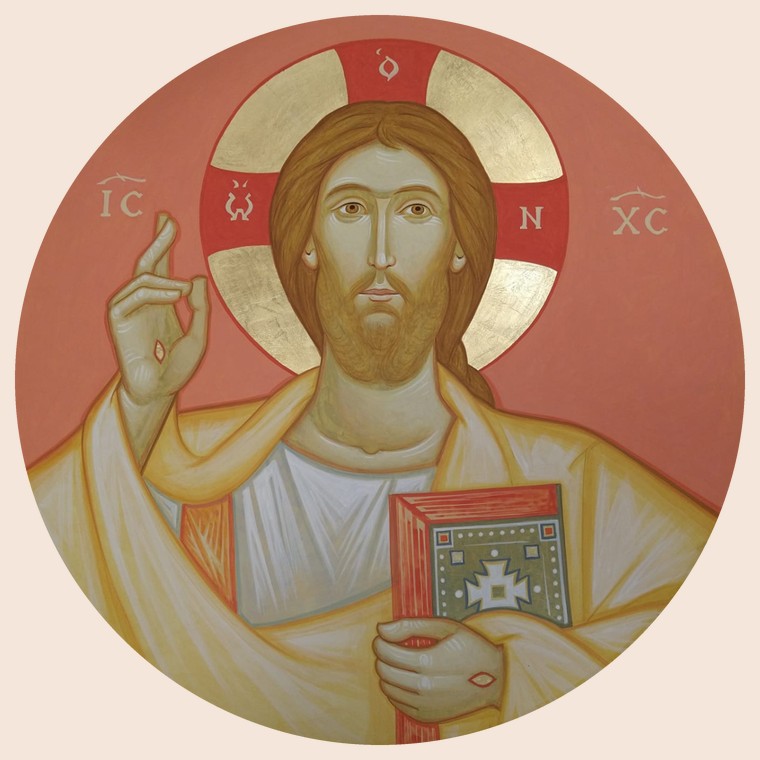
The Icon of Christ Pantocrator
At the very top of the chapel we contemplate the icon of Christ Pantocrator (the Eternal King and Almighty), who blesses those whom He accompanies on the pilgrimage of this life.
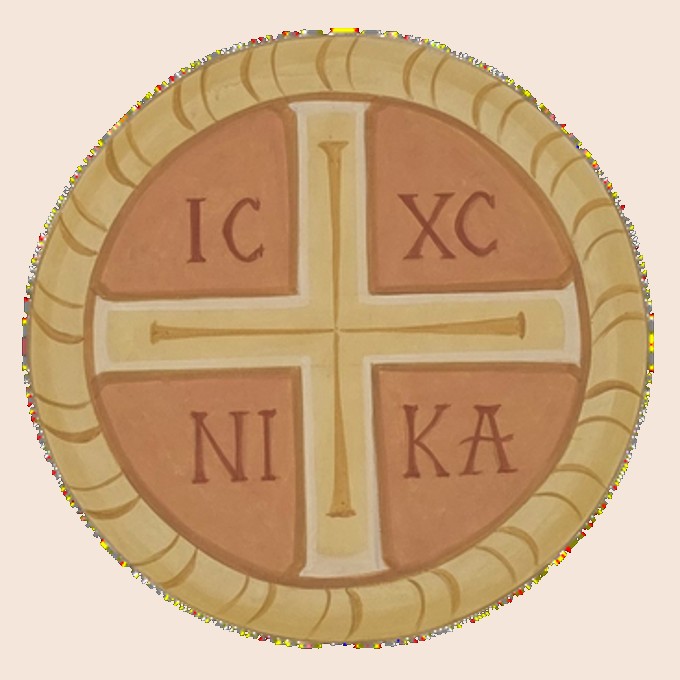
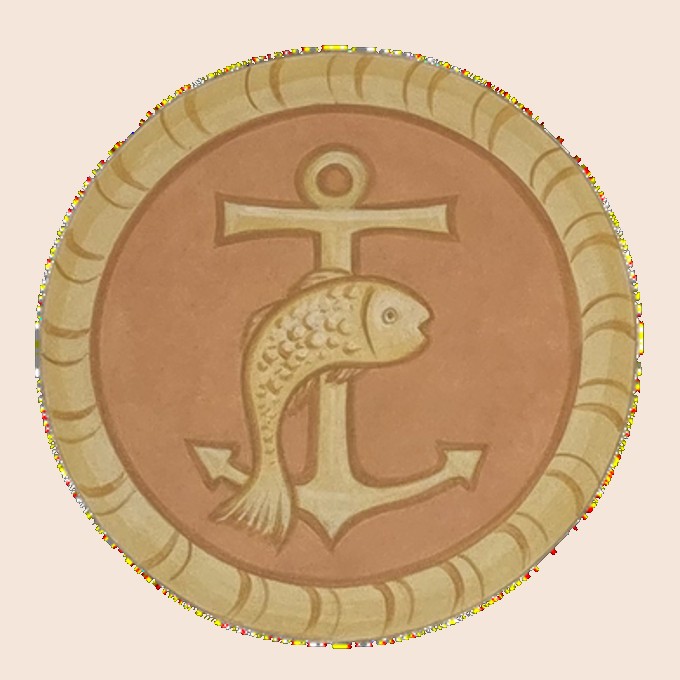
The chapel is the heart of the Manresa Spiritual Center, serving as the place where the sacraments of the Church are celebrated, particularly the Holy Liturgy, in both rites, as reflected in its design. The four frescoes symbolically depict the Stages or Weeks of the Ignatian Spiritual Exercises, while the medallions reflect the Eucharistic mystery in the lives of the Jesuit saints.
At the very top of the chapel we contemplate the icon of Christ Pantocrator (the Eternal King and Almighty), who blesses those whom He accompanies on the pilgrimage of this life.
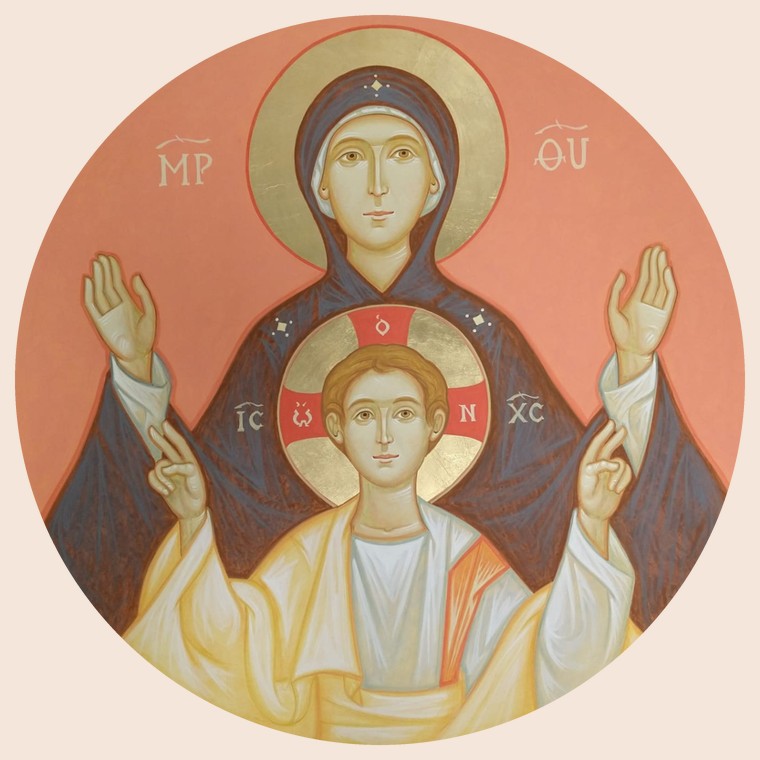
Above the altar hangs the icon of the Platytera (The Most High), depicting the Mother of God praying to the Child, through whom She blesses us.
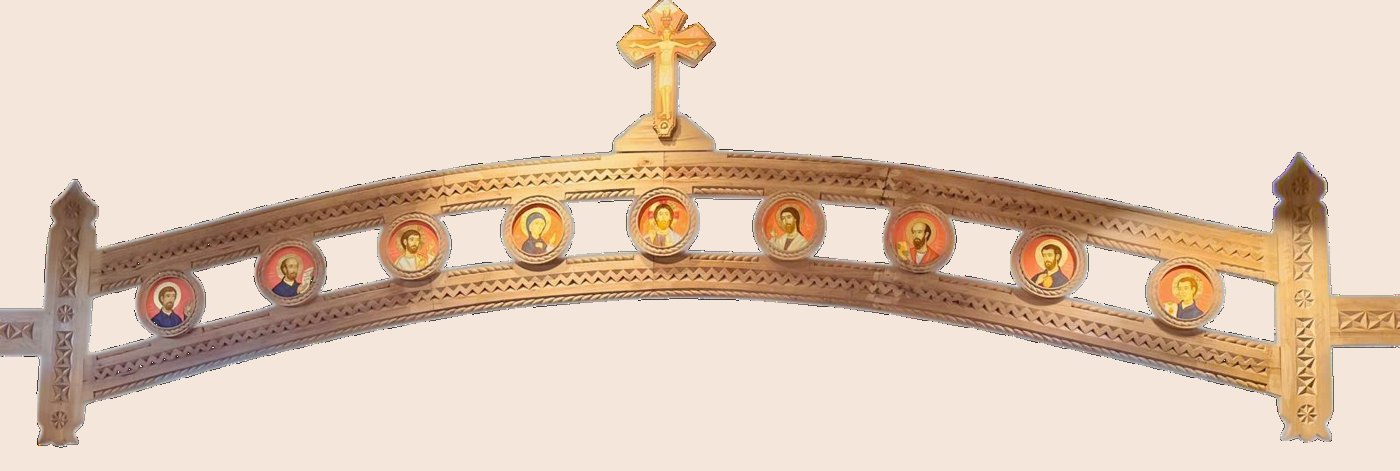
Instead of an iconostasis there is an altar screen with the Holy Cross above it and nine medallions featuring the Deesis at the center — Christ, the Mother of God, and John the Baptist. On the left: St. Peter, St. Ignatius of Loyola, S.J., and St. Stephen Pongracz, S.J. (patron of the Jesuits in Romania); on the right: St. Paul, St. Francis Xavier, S.J., and St. Claude de la Colombière, S.J., who contributed to spreading the devotion to the Sacred Heart of Jesus.
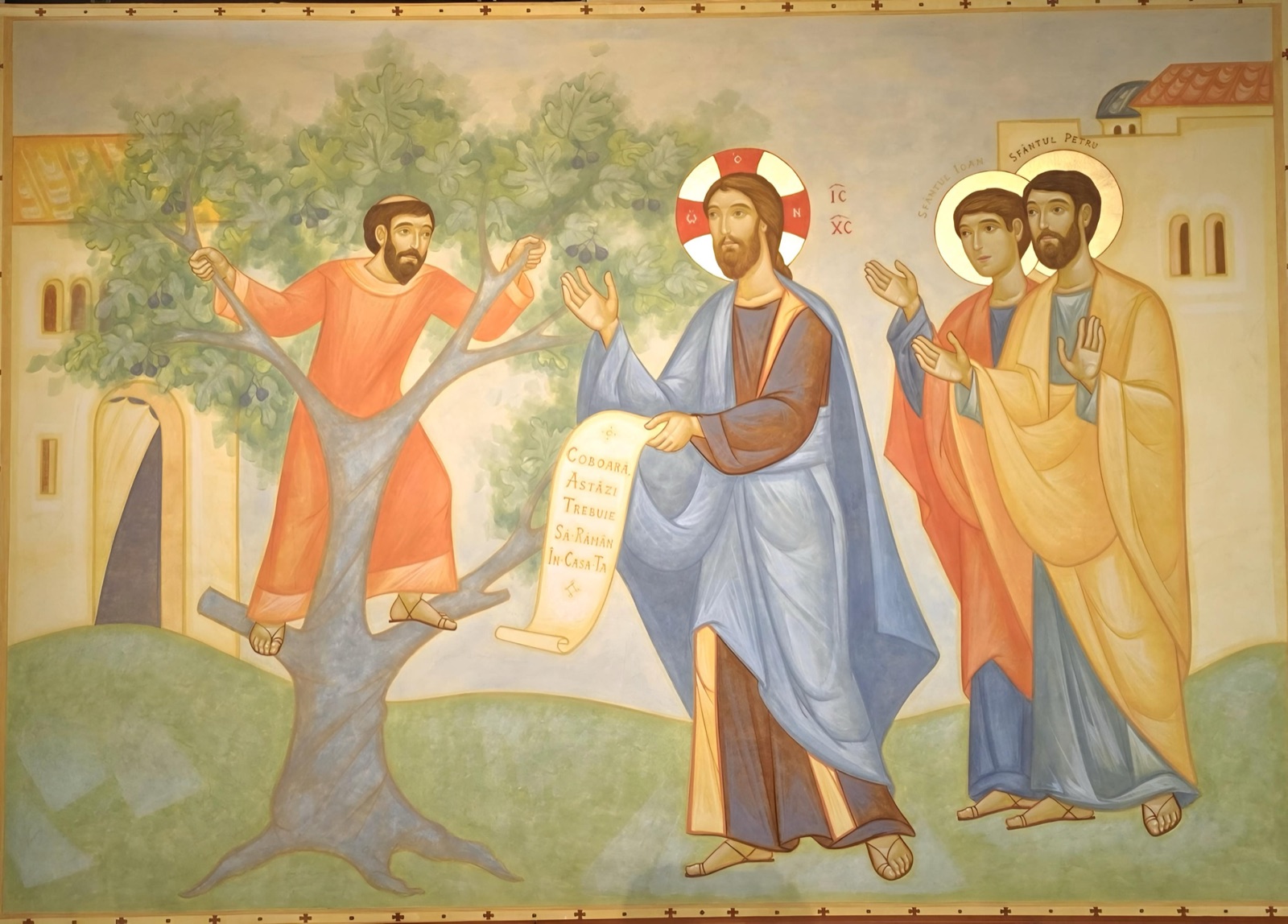
“Today I will stay at your house.” The encounter between Jesus and Zacchaeus, hidden in the sycamore tree, illustrates the first stage of the Exercises: the Call to Conversion through recognizing the need for salvation. The one of small stature becomes generous like Christ.
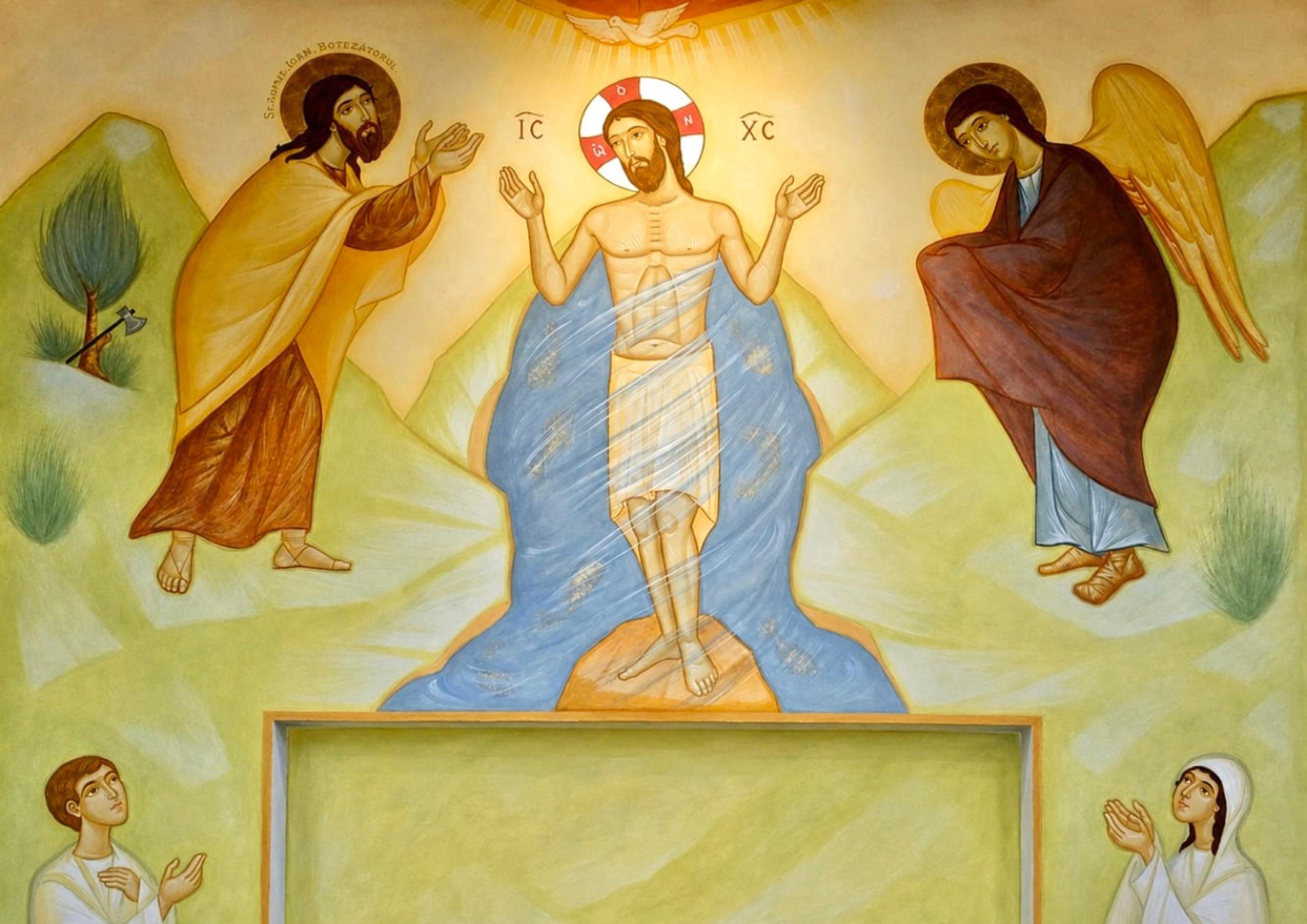
“As many of you as were baptized into Christ, you have also been clothed with Christ.” The Baptism of the Lord, at the entrance to the chapel, represents the Second Week of the Exercises: following Christ, the Eternal King. Just as the Savior enters the Jordan, so too are we called to bear witness to Him in the world, without being of the world.
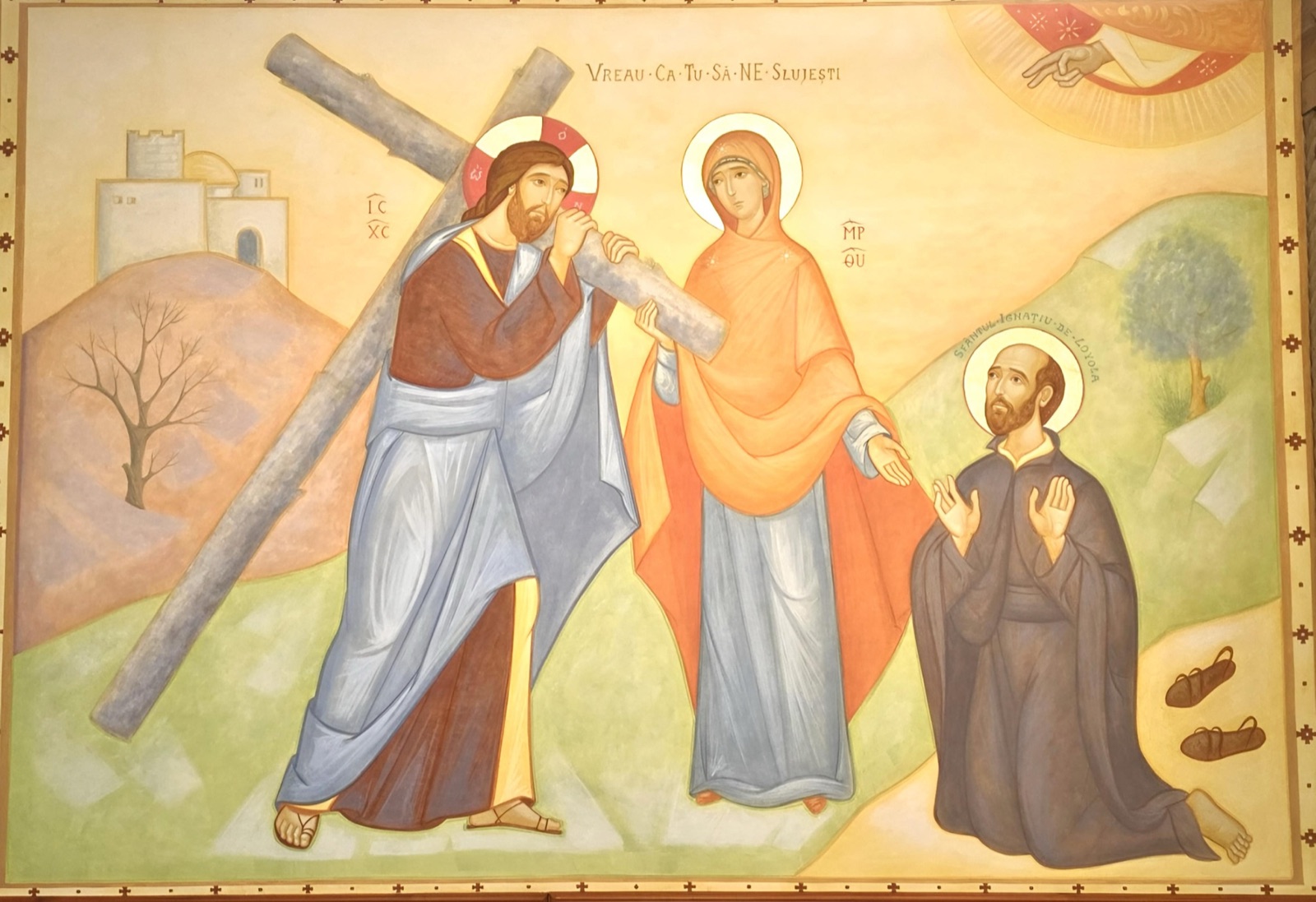
The fresco depicts the Third Week of the Exercises: the Holy Trinity helping Jesus carry the Cross, the new Tree of Life. The Mother of God intercedes for the reception of this sublime gift.
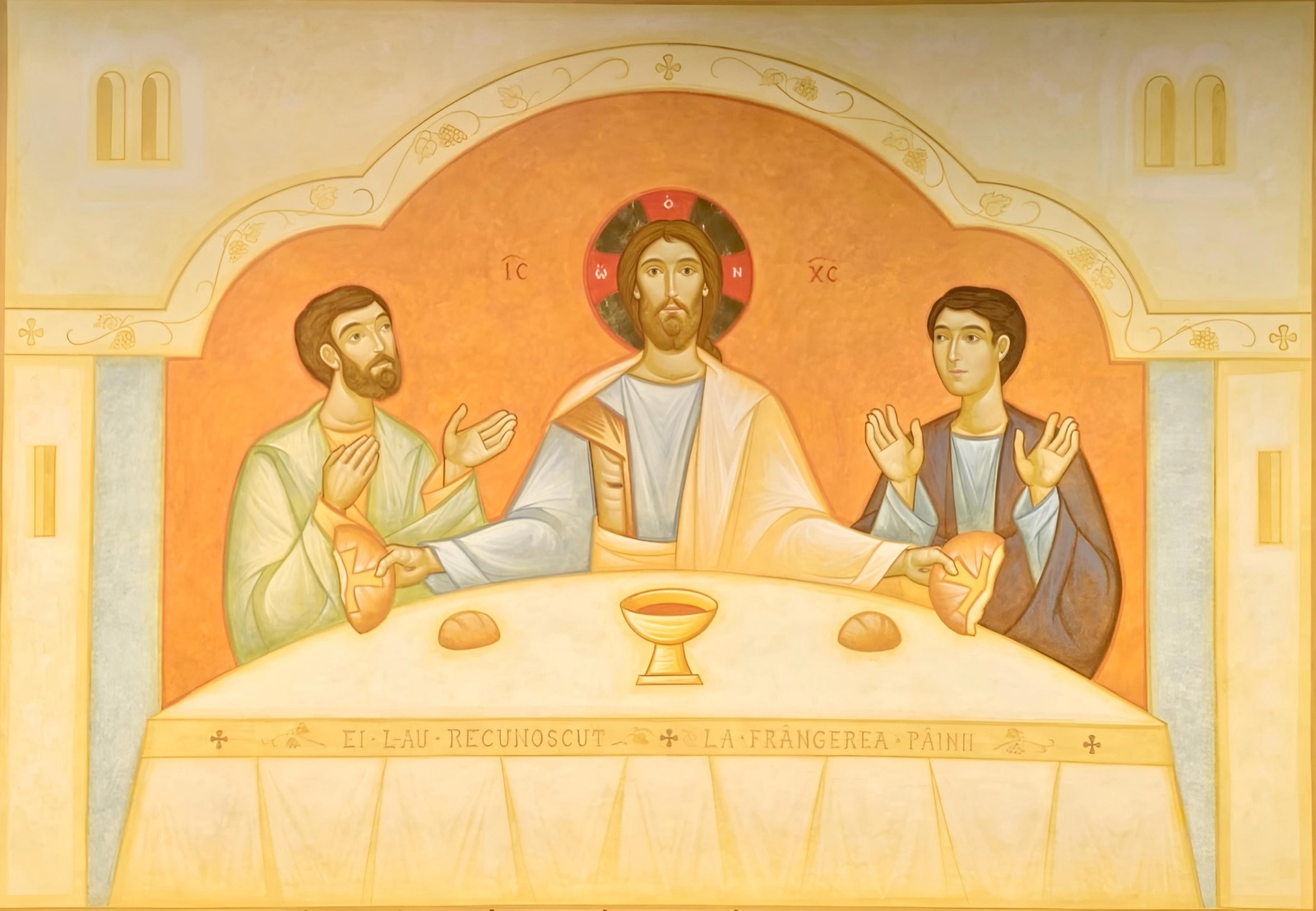
“They recognized Him when He broke the bread.” The fresco on the altar depicts the Paschal Banquet at Emmaus, an image of Week IV of the Exercises, in which the retreatant contemplates the Risen One and is transformed into the One contemplated. “He who is broken yet remains undivided, He who is eaten forever and never ends, but sanctifies those who partake of Him.”